martes, 26 de febrero de 2008

Bares, percepciones, y el síndrome de Scofield

Los niños en el primer mundo tocan el botón del ascensor con el dedo gordo ("thumbing").
El personal de las empresas entabla más comunicaciones, mediante más canales... pero se comunica peor.
Las aplicaciones Web2.0 hartan en su proliferación y efectismo -no voy a hablar de los adeptos de Facebook y de apps malsanas- pero todavía no producen un retorno evidente.

Estas son tres pequeñas salientes del mismo iceberg, un gran bloque de hielo con todo lo que está pasando que me gustaría entender, repensar, hasta formalizar. En realidad, me gustaría pensarlo mejor tras la charla que tuvimos con Ale Salevsky . Voy más allá, hubiera querido escucharlo mejor a Ale pero el restaurant era muy ruidoso. Pero veamos: la metáfora es excelente: teníamos un montón de impresiones para intercambiar pero la mitad de las veces yo no lo escuchaba. Lo mismo pasa hoy con los tres ejemplos expuestos: hay muchos cambios, tenemos a nuestra disposición una plétora de dispositivos, anchos de banda, y canales, pero... el gran filtro es el individuo, con escasísima atención, poco tiempo y pocas ganas de abrir sus filtros culturales.

Me fui del almuerzo pensando en todo lo que se puede concretar (papers, negocios, ideas) si uno tuviera un poquito más de tiempo y concentración. Un ejemplo de la ficción es el notable personaje de Michael Scofield en "Prison Break". Michael se abastrae del caos tumbero e imagina salidas posibles a cada momento, gracias a su inhibición a la baja latencia que hace que vea cada elemento como parte del todo pero casi con vida propia.

En fin, en medio del ruido de los bares y el problema de las percepciones, me interesa creer que los individuos medianamente inteligentes pueden "entender" a pesar del ruido, hayan visto o no "Prison Break".

PD, a los que preguntaron por el post anterior de Otredades, la respuesta es: ya estoy seguro.

lunes, 18 de febrero de 2008

Noticias de Ayer

Los artículos de opinión son como un vino cuya apertura uno sopesa y demora. Una vez en el aire, por más tiempo de elaboración y esfuerzos que hayan demandado, tienen un tiempo de vencimiento de pocos días.
Ni bien salió "El Caballo de Troya de la Web 2.0" en Convergencia, fui avisado por algunos amigos. Lo releí por arriba y sentí que un aroma rancio emanaba del monitor. Lo que había escrito sólo un mes atrás ya estaba viejo. De haberlo escrito ahora hubiero comenzado la historia de cuatro o cinco amigos que yacen sumergidos en Facebook, e imaginado un final donde cada uno de ellos recibiera la factura de la mismo telco por debajo de la puerta. La Telco es, más que nunca, un habilitador de eventos que ni imagina, disparado por sus clientes residenciales. Paradójicamente, los clientes producen más comunicación que las propias Telcos.
Hoy me llegó la invitación de un sobrinito como "friend" en Facebook. En su "wall" una amiga le habían comentado que era "la última persona que hubiera esperado encontrar aquí". Y sí, ocurre que Facebook es un sitio repleto de "últimas personas".

miércoles, 13 de febrero de 2008

Small hells: dialogs within organizations

A little crowd of five people is gathered in a dark room of a major city in LatAm. The noise coming from the window is almost unbearable. It´s hot; the last slides of a PowerPoint file hovers over the group like a colorful phantom. A certain smell of second-brand coffee gives off some notes of antique procedures. Somehow, all of them deserve a better life.

The speaker voice fades with his last remarks, giving some false tremor notes to his speech and bending his eyebrows as if truth could be gradually adjusted from a lie.

-As you may see, some changes have to be done in the operation of our Back Office. These faults represent about 0,5 million dollars monthly and...
-Why don´t we come back to them and check the info?
-Well... you know -a certain pause, barely looking at the naive interrupter-. If I had a little doubt about these numbers -which happens not to be the case- sure, I would do so. But...
- Precisely. As you are quite sure, we should adress this matter with them. Maybe it´s all about training.
- Ok -but the tone it´s not of Ok-. Training may come later. You can´t do nothing about these results. You´re not supposed to check numbers with them . They are so...
The phantom of the PowerPoint´s last slide move slowly along the ceiling.
-... operative? -said the youngest, smiling-.
- Hmmm. Yes. Operative.

The meeting is over. Vital signs rise in all the members. The small crowd is scattered towards several floors and several lives, all of them equally operative.

viernes, 8 de febrero de 2008

The problem with Facebook, vol.XXI

And here we come again. The problem with Facebook is that its very basic rationale goes against all basic social networking ideas of "sharing", being polite, collaborating, etc.

Now I´m not talking of zombies, being kissed or not, poked or not, flirt or not.
I´m talking about more neutral applications which still demand bothering the rest.

If in order to see the results of any stupid tesk I would be taking, I need to bother some 20+ friends, then those people are not friends any longer.
They are only elements I´m manipulating to feed my ego during my free time.

And I´m not sure about this last fact. Free time? Any HHRR manager may have a feast gathering corporative Facebook users data.

"Sorry for the inconvenience" says the message. It`s a fact, Facebook stinks.

miércoles, 30 de enero de 2008

Mozilla - Ten years after


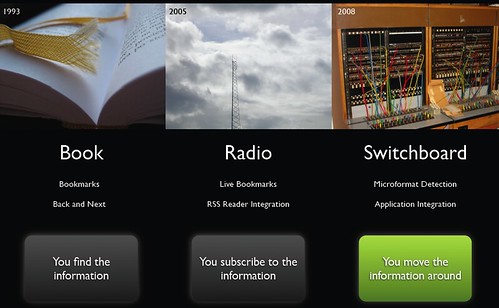
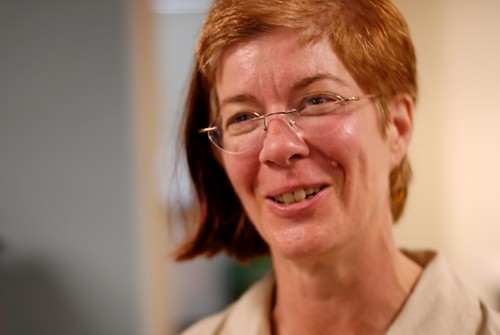
Spanish highlights: el sujeto del extraño peinado es Mitchell Baker, el CEO de Mozilla. Estos dias se festejan los 10 años del browser (originado en Netscape, para los nostálgicos). No todo es fiesta: seguramente estará en las noticias el porqué de la pulseada Mozilla vs Explorer.

Esto no es más que otro capítulo de la vieja lucha establishemnt empresa-céntrica vs la libre iniciativa. Al final del día, mis amigos que saben dicen que Mozilla es muchísimo mejor. El futuro, según cuentan las propias autoridades de Mozilla, es Firefox 3: "moverse" en la información

=========================================================

Those were the days, my friends... when Netscape was released. January 1998. Ten years ago Internet was still rising, only a hundred or so of millions in the whole world, dotcom collapse didn´t occur yet, plenty of investment in Silicon Valley and here in LatAm watching how portals and ISP were adquired by major telcos.

But something is still going on. The "way we see the web" (WWSTW, and I´d like to be given the credits of this in other ten years) is still an issue. Is there any analogy in other fields? Explorer works "fine" in most applications but Mozilla excels. Explorer fails in more socialized versions of the web (try new Facebook apps in Explorer). But as perversity is the name of the game, most of designers thinks most in Explorer while doing their job.

Flashback, ten years ago. How was the feeling, then?

MOUNTAIN VIEW, Calif. (January 22, 1998) -- Netscape Communications Corporation (NASDAQ: NSCP) today announced bold plans to make the source code for the next generation of its highly popular Netscape Communicator client software available for free licensing on the Internet. The company plans to post the source code beginning with the first Netscape Communicator 5.0 developer release, expected by the end of the first quarter of 1998. This aggressive move will enable Netscape to harness the creative power of thousands of programmers on the Internet by incorporating their best enhancements into future versions of Netscape's software. This strategy is designed to accelerate development and free distribution by Netscape of future high-quality versions of Netscape Communicator to business customers and individuals, further seeding the market for Netscape's enterprise solutions and Netcenter business.
========================================================

What about the future? Perhaps this slide talks by himself. According to Mozilla developer Alex Faaborg the idea is to move around the information -far beyond bookmarking or even RSS feeds-. According to Alex, microformats are the answer to this issue - but which ones will Firefox natively support? Alex outlined 3 fundamental types: identity (hCard), geo (geo, adr), and calendar (hCalendar).

martes, 22 de enero de 2008

Facebook in a nutshell -or two-


If you are familiar to this blog you`ve realized by now that I don´t like Facebook very much.
I have two reasons for that:
  • There is always a continuous crossing of boundaries (personal vs professional).
  • You always have to check on new indiscrete applications -or just avoid them-. If not carefully understood their impact, this applications may invade your "friends" space.
Having said this, here´s a list of Facebook characteristics that may be of some help, or as I put it, "Facebook in a nutshell".
  1. The Wall is merely a space. It is placed on each user's page allowing friends to post messages for the user to see. One user's wall is visible to anyone with the ability to see their full profile. Many users use their friend's walls for leaving short, temporal notes.
  2. One of the most popular applications on Facebook is the Photos application, where users can upload albums of photos, tag friends, and comment on photos. About 60 million photos are added each week. That means 5 terabytes of disk space.
  3. A somewhat naive feature in Facebook are gifts. They are displayed in the website's gift shop. Frinds can send "gifts" –which are small icons of novelty items- to each other by selecting one from Facebook's virtual gift shop and adding a message. Gifts given to a user appear on the recipient's wall with the giver's message, unless the giver decided to give the gift privately, in which case the giver's name and message is not displayed to other users. Facebook users are given one free gift to give upon account signup.
  4. Facebook includes a "poke" feature which allows one user to send a “nudge" (in the Messenger sense) to another. According to FAQ "a poke is a way to interact with your friends on Facebook" (...) "People interpret the poke in many different ways, and we encourage you to come up with your own meanings." In principle this is intended to attract the attention of the other user. Some users take it as a sexual advance. This interpretation of the feature inspired a popular Facebook group titled "Enough with the Poking, Lets Just Have Sex", which, as of December 2007, has more than 340,000 members.
  5. The "status" feature allows users to inform their friends and the Facebook community of their current whereabouts and actions. This very much resembles Twitter functionalities.
  6. Facebook events are a way for members to let friends know about upcoming events in their community and to organize social gatherings. Events can be open, closed, or secret. When setting up an event the user can choose to allow friends to upload photos, video, and posted items.
  7. The Facebook Platform provides a framework for developers to create applications that interact with core Facebook features. Now there are more than 10,000 applications. Some metrics have changed along the months, as Facebook changed the way in which the popularity of applications is measured, in order to give more attention to the more engaging applications. There is some criticism about the attention some applications received only by growth; in fact they were highly viral, yet useless applications. This effect deserved the name of "cornucopia of uselessness." OK, my judgement is biased...
  8. Facebook released an application of its own for sharing videos. Users can add their videos with the service by uploading video, adding video through Facebook Mobile, and using a webcam recording feature.

Since I have some passion for contradiction, I have recently joined the Keira Knightley Atonement Green Dress Appreciation Society Facebook group. Useless? Well... it´s another Facebook application, you see.

martes, 15 de enero de 2008

MacBook Air vs Sony Vaio

The VAIO, as an ultraportable machine with long battery life, is impressive. The integrated DVD drive is a plus, too. A Sony Vaio IS TINY by definition (not designed for huge fingers).

The MacBook Air, on the other hand, will be an impressively portable, basically-full-size computer. It won’t feel small and tiny like the VAIO but it likely won’t weigh you down much (about 1.5 kg) either. Both laptops have similar perfomances based on Corel 2 Duo processors with some advantage for MacBook. Same happens with RAM: Apple’s comes with 2GB of 667MHz DDR2 SDRAM. Sony’s comes with 1GB of 533MHz DDR2 SDRAM.

Finally, Sony’s site has the VAIO listed at $2099. You can currently get it at Best Buy for $1849. The MacBook Air is $1799, launch price.

miércoles, 9 de enero de 2008

Jennifer Lopez charts

"A Jennifer Lopez chart is an informal technical analysis term used to indicate the rounding bottom in a stock's price, especially as seen on a chart or graph. The term is inspired by singer and actress celebrity Jennifer Lopez, who is known for having a curvaceous figure".

No fun at all. Quote belongs to Investor Words. I wonder about some Angeline Jolie index.

martes, 8 de enero de 2008

Facebook: Are you a Zoosker?

So the big-big benefit of Facebook is letting developers push their content into Facebook home with zero effort. Good try. And what about the users? Do they know what are they using?

In real life you don´t try new medicine unlees it is advised -your doctor, a friend, whatever-. In Web 2.0 you´re just at one click away of installing unknown apps in your Facebook profile. Throwing snowballs (is it as stupid as I reckon?), promote hotness (whatever it is), bother all your LinkedIn connections trying them to get Facebook-ed, or just buy installing Zoosker -proposing yourself for "socializing" in its purest form.

In a recent Yahoo! post a married woman asked simply "What would you do if you find your husband added the 'zoosk'application on Facebook? Most of the answers were "talk to him, he probably didn´t meant to do it". That´s the problem with easy integration of features, not to mention the long-discussed surrender of personal information. "Zoosk is a fun way to socialize and meet other singles in your area" says Facebook. Once you click it, it´s not only that you sex appetite seems to be reloaded; everyone is informed in black and white that you are -so to speak- craving for casual sex.

One final comments from a user. "I haven't got 15 single friends to invite to this stupid app, and I shouldn't have to bug the ones that have no need for it just so I can use it!". As I see it, I have only two issues about this apps
i) the instant spread of the app to all contact list -maybe you didn´t want to-
ii) the blur between personal and professional activities.

As we have seen many times, the second issue is a key factor in Web 2.0 developments.

jueves, 27 de diciembre de 2007

Naked Truth 2.0

La mayor parte del tiempo la gente de las empresas rodea un cierto hecho, ofrece versiones complementarias... pero no siempre cierra filas sobre una verdad descarnada, una "naked truth" que sea punto de partida. Como se comentaba antes, cuanto más amplia es la comunicación, más acartonada y más distante de la realidad se torna. De paso, soy de los que cree que existe una realidad sobre la que es posible coincidir.

En función de la madurez que uno tenga, esta distancia puede lastimar. "Ser bicho" es saber manejar estos códigos, para ciertas personas. Para otros, "ser bicho" es mentir, o al menos manejar aviesamente la información. Sospecho que la clave del entendimiento pasa por analizar cuál es el nivel de verdad que está dispuesta a admitir una organización.

Esto, leído "en módulo", puede resultar trivial. Pero es la causa que explica porqué hay gente que no puede trabajar en empresas grandes; el manejar distintos matices o el aceptar ambigüedades simplemente les resulta inaceptable -y hay algo autorreferencial en esto-. Me pregunto cómo se edificará el concepto de verdad en un contexto Enterprise 2.0. El ejemplo sencillo es el blog de la empresa, donde hay (debería haber) algo más de espontaneidad, capacidad de construcción de una verdad en común, capacidad de tolerar comentarios adversos. Imagino un post sobre resultados de ventas menores a lo esperado, link a planillas que expliquen causas (menor stock, menor impacto de la publicidad, etc) y la aparición de verdades contradictorias moderados por un experto en comunicación que... deberá saber construir (definitivamente, él sí) sobre la ambigüedad).

Web 2.0 is a warm gun, baby.

viernes, 14 de diciembre de 2007

Some questions for 2008

We just can´t foresee what will our society look like in coming years. Neither can we assess the real impact of undergoing changes in technology and communication. Probably 2007 will be remembered as the year of x,y,z events we cannot even recognize these days. The year China slow down? The Euro year? The first year weather issues were taken more seriously? Who knows.

All in all we, we do like challenges. As Snark Consulting deals with changes in Marketing and Technology in a Telco and web 2.0 ecosystem (check our last report on the matter), we dare to make our best wishes for the year to come, but with not solemnity at all.

The business in Snark Consulting is to be curious about next changes. The toast we propose here is not made of alcohol but of questions. Do the honours with me, rise your glasses, and ask yourself with curiosity:

  • Do we have enough of walled garden ideas (this web 2.0 gadget with this telco or that exclusive mobile phone)?
  • Is it Google going mobile when their own phones?
  • Are common individuals -mass stream- finally getting familiar with communication breakdown -yes I do like Led Zeppelin, but I´d like to go beyond the song-. Or just new teenagers will handle going indie twittering the whole life?
  • Is web 2.0 going corporate as it seems, or it is just another way of controlling employees ideas and underlying currents within organisation?
  • Is web 2.0 being profitable in 2008, or the last adquistions are a minor bubble -I think not.
  • Are you going to do the usual Christmas spam -I hope not!

No more words. Let´s be prepared for the unexpected, and make your wishes.

martes, 4 de diciembre de 2007

Facebook: a diminishing giant

  • Moto: "Facebook is a social utility that connects people with friends and others who work, study and live around them. "
  • Suspect: as something gets bigger and bigger, it losses some of the essential meaning.
  • Fact: Facebook's Beacon was released inNovember as a part of its Facebook Ads platform. It is designed to track the activities of Facebook users on a series of 44 Web sites, and to report those activities back to the users' Facebook friends, unless specifically told not to do so. The lack of disclosure about what was going on has led to a maelstrom of criticism against Facebook over the past few days. Facebook's tracking was far more invasive and extensive that the company originally let on.
  • In the media: "We believe that in this market people will constantly try to find ways to exploit the personal information they have and that they gather" (Mark Cooper, CFA).
  • My two cents on this: I ask myself how web2.0 giants can grow and be profitable without forgetting its roots and letting down their users?
  • Addendum: Facebook users are winning the battle.

domingo, 25 de noviembre de 2007

Conferencias

Martes 13 de noviembre, final de la primera jornada del evento de Convergencia sobre IP, en el Sheraton. Los cuatro panelistas miran al chairman como si fuera esto un partido de tennis. Y no lo es, pero dar conferencias es un deporte que también tiene sus reglas, que me gustaría revisar:

  • Antes de la charla: pensar cuál es la audiencia. En este caso había un gap grande entre un auditorio del mundo de los "fierros" y los temas que ofrecieron los panelistas. No se puede explicar todo, asì que conviene sólo elegir pocos ejemplos bien claros.
  • Tomarse la molestia de llegar una hora antes, y de chequear que funcione todo bien.
  • Conocer al chairman y a los otros panelistas. Puede haber superposición de temas.
  • Sondear el ánimo del público. En el caso de este evento, era tiempo de descuento... no había lugar para grandes soliloquios.
  • Jamás debe uno excederse del tiempo permitido. Se puede contar la historia de Web 2.0 en un minuto, o hablar sobre los arrecifes de la Gran Barrera Australiana durante años.
  • No hablar demasiado, ni demasiado rápido. Más imágenes que texto. Jamás repetir lo que está escrito (leer, se entiende?).
  • Si hay preguntas con cierta tendencia en contra, jamás pelearse con el público. Explicar el punto de vista propio con elegancia y conceder la posibilidad de razón en el otro.
  • No gesticular. Los micrófonos, que pueden rechinar a cada movimiento, no tienen la culpa de nuestros nervios. Los vasos de agua que pueden volcarse, tampoco.
  • Si no se posee gran histrionismo, no hacer chistes. Se puede involucrar al público con preguntas muy directas, pero la barrera del humor es difícil de cruzar. Martín -el del medio del panel- lo hizo bastante bien.
  • Apagar el celular. Directamente. Qué puede pasar en esos 15 minutos? No hacerlo puede distraer y provocar fastidio en el público.
  • Peter Curwen, un amigo de Inglaterra, solía decirme: "por qué tener miedo? Trabajaste mucho para llegar a dar esta charla. Es un honor". El ni siquiera pasaba por la humillación del PowerPoint, era un narrador nato y a lo sumo repartía apuntes entre el público. Claro, Peter era muy bueno.
  • Finalmente si algo sale mal... uno está allí haciendo un esfuerzo, creo que no hay culpas. Hay que apurar el trago, cruzar los dedos y esperar que se reinicie el laptop, o que el sonido funcione. No olvidarse de pedir ayuda, si es necesario.
Mi tema fue Web 2.0 corporativa. En breve la subiré al SlideShow.

domingo, 28 de octubre de 2007

Enterprise 2.0


Enterprise 2.0 is more than building a blog within a company.
It is more -by far- than a new communication channel for customers or employees.
It is so important that I would -almost- avoid flasy diagrams like the one above.
No time for examining new memes in the trend.

Enterprise 2.0 applications are becoming more than just wikis, blogs, tagging tools, and ajax front-ends. Imagine new networking capabilites in the company, evolving clusters of knowledge, or subtle boundaries you´d never imagined before. It is about designing wisely who has the control of the information, and what to do with it according to your human resources.

So, some questions might arise. Do you know there is risk? Who is sharing the knowlege? Are they asking for reward? Where are the information bottlenecks? If information would flow almost free, no matter IT geeks would do... would you feel comfortable with this fact?

This is not Web 2.0. It has to do with lower number of users, non-flat hierarchies, nothing to do with "showing your real self" or making fun. And I´m sorry about that.

So please, if you read somewhere about someone asking for an Enterprise 2.0 ROI, it´s a complete nonsense.

lunes, 22 de octubre de 2007

Telefokia

El anuncio de hace pocos dìas de Nokia y Telefonica parece cambiar las reglas del juego. "Nokia will customize the new Multimedia Menu to provide easy access to Telefónica services... Similarly, Telefonica customers will be able to access all Nokia services through the Multimedia Menu".

Consecuencias?

  • Parece en sintonía con la iniciativa Ovi según la cual Nokia pasa a ser Nokia 2.0 -lo sé, no me gusta el término-. En fin: que los fineses no son gadgets, sino que son servicios para comunicar gente.
  • Telefónica advierte y da prioridad a todo el movimiento social de la web, y reconoce que esto pasa al mundo móvil. A la vez delega en alguien que sabe manejar interfases y desarrollar con rapidez.
  • Para el cliente esto es bueno. Nokia será un medio único de contacto y no cien maneras distintas de hacer las cosas para cada aplicación distinta.
  • Si Facebook permite todos los widgets imperantes, qué pasará cuando Nokia tome el control de un celular de Telefónica? Imagino un escenario de "sòlo apriete este botón y verá sus contactos en la pantalla" con un suave disclaimer en segundo o tercer plano bloqueando la caja de Pandora legal que niegue responsabilidades de Nokia y Telefónica.
  • Imagino que todo esto aplicará a terminales S60 para arriba. Si esto es así, y el bottom line es "manda Symbian", este acuerdo puede abrirse a otros vendors móbiles.
We´ll see...